What is a Comprehensive Plan?
Mill Creek's Comprehensive Plan is a 20-year roadmap that envisions the City's long-term growth, infrastructure, and services. It articulates a series of goals and policies intended to guide the day-to-day decisions of elected officials and City staff.
The plan is intended to be a comprehensive guide with policies to be used in making decisions concerning future land uses, establishing urban growth boundaries and city limits, extensions of community services and facilities, locations of future transportation/circulation facilities, parks and open space, designation and protection of environmentally sensitive areas and desirable urban design elements of the City.
Plan Elements
The Comprehensive Plan is organized into elements, like chapters in a book. The goals and policies in the Plan are implemented in a variety of ways including through city programs and regulations, such as zoning.
- Land Use
- Housing
- Transportation
- Environment
- Utilities
- Economic Vitality
- Capital Facilities
Project Update Overview
The City of Mill Creek is starting analysis and engagement to adopt a new Climate Element as part of the City’s Comprehensive Plan. This element will also include two subelements that focus on reducing greenhouse gas emissions (GHG) and increasing resilience to future hazards the community may face.
This project is being driven by recent changes to the Growth Management Act that requires all cities within the Puget Sound area to reduce GHG emissions by 2050 and increase community resilience to future hazards such as flooding, wildfire/smoke, extreme heat.
Project Process and Schedule
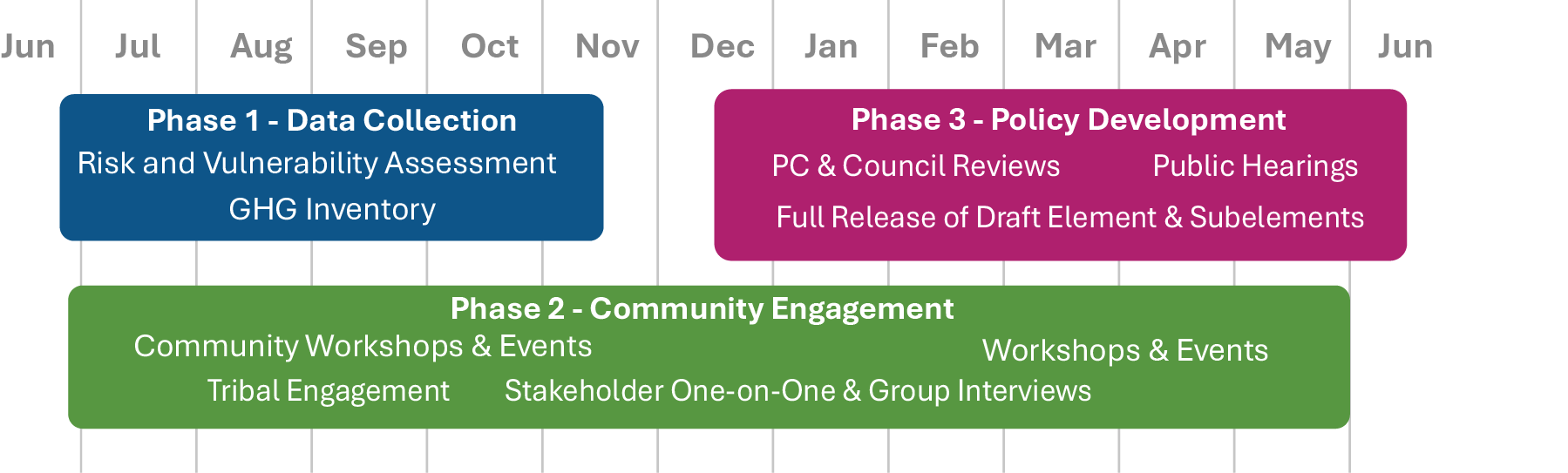
The creation of the Mill Creek Climate Element is expected to take place over multiple phases beginning in May 2026 and ending in June 2027.
Why is the City planning this now?
This project is being driven by recent changes to the Growth Management Act in 2023 that requires all cities within the Puget Sound area to reduce Greenhouse Gas Emissions (GHG) emissions by 2050 and increase community resilience to future hazards such as flooding, wildfire/smoke, extreme heat.
What is the Climate Element?
Per new state requirements, the Climate Element is a part of the City’s Comprehensive Plan that focuses on preparing for future conditions relating to change weather patterns and increased hazards, reducing risks, and finding practical ways to lower pollution and energy use while keeping the community running smoothly. It must specifically protect especially vulnerable, at risk, or overburdened communities.
What is the Resiliency Sub-Element?
Per new state requirements, the resiliency sub-element is a part of the City’s Comprehensive Plan that helps plan for and respond to climate hazards like extreme heat, flooding, coastal, groundwater intrusion, and wildfire smoke while improving the community’s ability to prepare for, adapt to, and recover from these impacts over time.
What is the Greenhouse Gas Emissions (GHG) Reductions Sub-Element?
Per new state requirements, the GHG reduction sub-element is part of the City’s Comprehensive Plan that intends to document and create an inventory of localized emissions as well as identify actions that the City will take to reduce these emissions.
What are the strategies to reduce GHG emissions?
Strategies will be the result of this project, so there are no proposed strategies to consider at this time. We anticipate to have a first draft of reduction strategies by Fall/Winter 2026. Greenhouse gas emissions reduction means finding ways for the City to lower pollution from everyday activities through actions such as improving transit options, making buildings more energy efficient, supporting walking and biking, and reducing waste, so the community can lower its emissions reductions while also saving money and improving quality of life.
Will this impact City residents?
This project is about adhering to state requirements as well as planning for potential impacts in the future. City residents may see small incremental changes over a 10-year period, based on the final policies that will result from this project.
Is the City trying to control how people commute or heat their homes?
No, the City is not trying to control how people commute or heat their homes. The primary focus is City assets and City actions. The goal is to provide more options and make practical improvements that help residents save money, stay comfortable, and choose what works best for them.
Upcoming Opportunities
- Mill Creek Festival July 11th and 12th (Link leads offsite)
- City Council Meeting July 14th
- Planning Commission Meetings July 16th
Project Resources
- Frequently Asked Questions (coming soon)
- Project Charter (coming soon)
- Engagement Plan (coming soon)
- Project schedule (coming soon)
- State resources: Washington Department of Commerce Climate Planning (Link leads offsite)