
Code Enforcement

Mill Creek's vibrancy is a direct reflection of its neighborhoods. The City is home to a number of homeowners associations throughout Mill Creek, which have specific neighborhood rules to preserve the look and feel of our beautiful city.

The City also has land use codes that promote safety, livability, and help maintain the character of our community. These codes are especially important in areas without active homeowner associations because they help create and sustain Mill Creek’s identity.

All Mill Creek residents share a responsibility for creating and maintaining quality neighborhoods. However, people are often unaware of the code and unintentionally create situations that are unpleasant for neighbors. Below are some tips about common code violations to help residents be great community members.
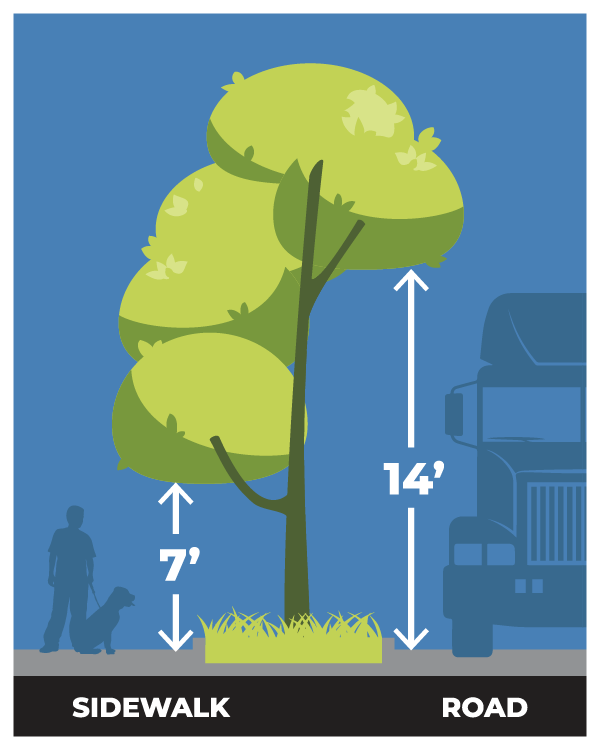
Sidewalk Right of Way Clearance diagram
Vegetation in the right of way should be trimmed to 7 feet above sidewalks and 14 feet above the road.

New OpenGov permit portal for code enforcement complaints coming January 1, 2026.

Report an Issue for Code Enforcement

If you notice issues like unpermitted construction, property maintenance violations, or zoning concerns, this is the place to report them. Your submission helps city staff investigate and address potential violations to keep our community safe and well-maintained. Report an issue for code enforcement at OpenGov.com below.

Maintaining Your Property

Maintenance

Remove or trim back overgrown vegetation and dispose of all garbage and debris. Piles of cut brush can harbor rats and other animals, which may impact the health of residents and pets. Property owners are required to adequately maintain fencing, remove noxious weeds, tow away junk vehicles, paint over or remove graffiti, and keep the structures on their property in good repair.

Sidewalks

Property owners are responsible for the sidewalks and planting strips adjacent to their property. Sidewalks must be clear of vegetation, litter, ice, snow and other hazards that block the pathway or interfere with safe pedestrian use. Vegetation must be maintained so that trees, plants and shrubs do not overhang any portion of the sidewalk (7 feet above the sidewalk and 14 feet above the road), or do not obscure any traffic control device. Vegetation within three feet of a fire hydrant cannot be over six inches in height.

Vehicle Parking

All passenger vehicles, including pickup trucks, must be parked in a paved or gravel driveway, parking space, carport or garage. No RV, boat, trailer or junk vehicle is allowed to be parked or stored in any front yard or front yard setback area, including the driveway. An RV may be stored in a side or rear yard if it can be fully screened from view from any public right-of-way. 

Junk Vehicles

A junk vehicle is any motor vehicle which meets at least three of the following conditions: more than three years old, extensively damaged, inoperable, fair market value equal only to scrap value, or expired tabs. MCMC 17.27.100 prohibits junk vehicles from being parked in any front yard or driveway (see also: RCW 46.55.230). In addition, MCMC 10.12.125 prohibits a vehicle without current state tabs from being parked on public roads. Without valid tabs, the vehicle may be ticketed or towed. Junk vehicles need to be stored out of view or removed from the property.

Home Occupation

As stated in MCMC 17.23.050: The following activities are not eligible for a home occupation permit because of their incompatibility with maintaining residential neighborhood character:

A. Medical or professional clinics.
B. Retail activities of any type.
C. Stables, kennels, animal husbandry, or farming activities except as provided in MCMC 17.04.
D. Vehicle repair, automobile detailing, or automotive servicing activities.
E. Any activities involving more than five customer or business visits per day (Ord. 2005-609 § 2).

If the City is notified of a code violation, such as those listed above, it will notify the property owner and set a time period for the issue to be corrected. If a property owner fails to correct a violation within the specific correction period, they will be issued a $100 fine. If the code violation is still not corrected, a $250 fine will be issued, with fines accruing at $250 per day for every day the violation remains uncorrected.

Search